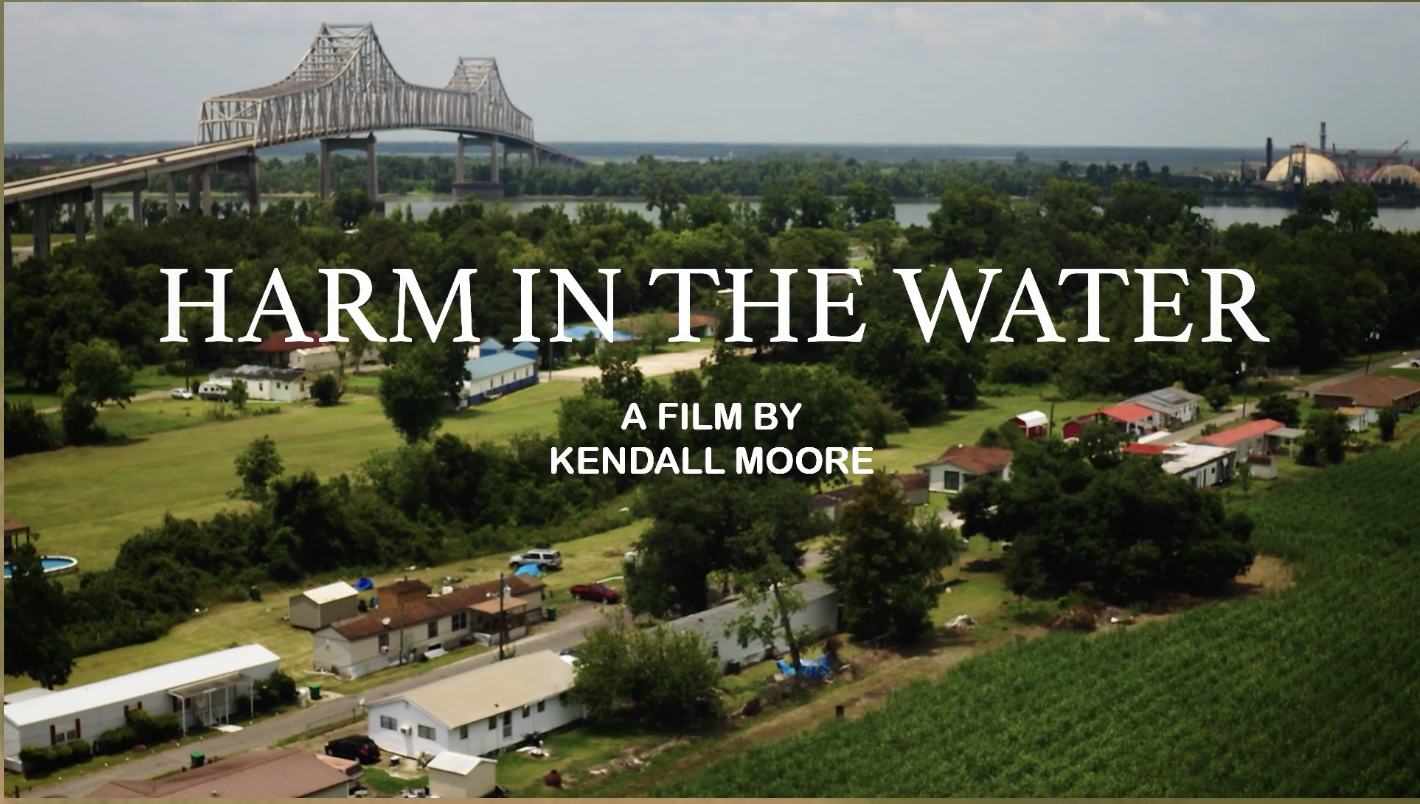
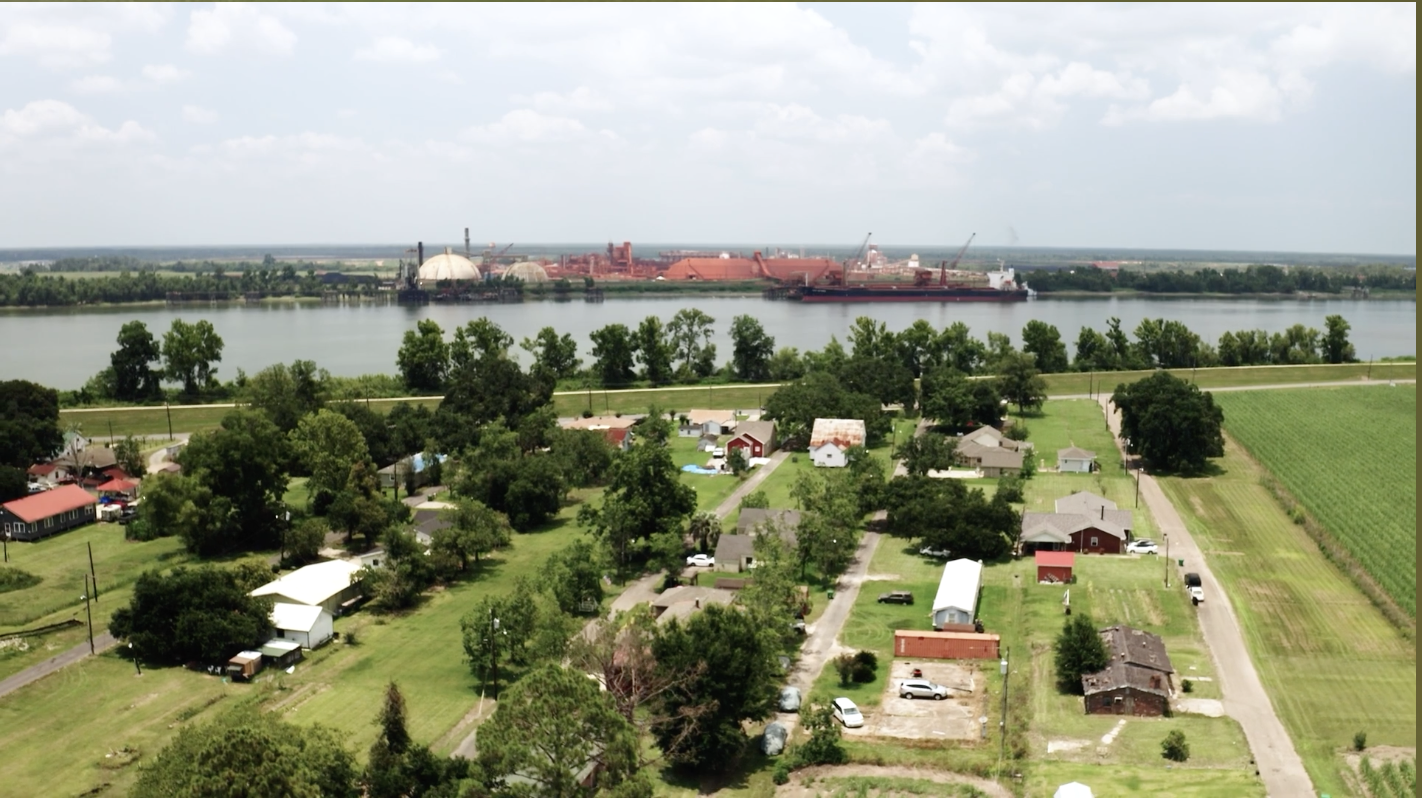
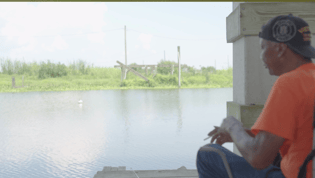
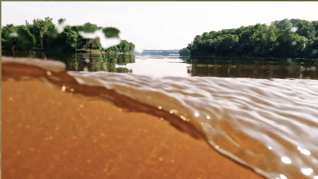
Best Documentary winner, Harm in the Water, is a feature-length film about water pollution, highlighting the lived experiences of Black communities along the Mississippi, especially those in southern Louisiana. The film screened at the Essence Film Festival July 2025 in New Orleans, about a mile from the Mississippi River where it was filmed.
Dr. Kendall Moore, Professor of Journalism at the University of Rhode Island, directed the film with associate producer Martha Merson, Project Director at TERC. Their partnership began in late 2019 and they have since collaborated on two films. Dr. Moore is a filmmaker dedicated to telling science stories through the lens of Black, Brown, and Indigenous communities. For both Harm in the Water and a forthcoming film about reckoning with racist science, Merson has drawn on expertise and networks she developed through her TERC projects, Statistics for Action and iSWOOP. Her collaborations with staff from the U.S. Fish and Wildlife Service. and the National Park Service made finding sources for both films a joyful endeavor.
Below Martha describes her involvement in the film.
I first learned about Kendall's films at the Inclusive Science Conference in 2019. Her film Can We Talk, which was screened at the conference, amplifies the voices of people of color navigating careers in STEM despite the systemic barriers they face. Kendall also moderated a session in which she laid out a vision for scientific research that prioritizes relationships rather than the currency of research labor for money. I approached Kendall after that session because I sensed that she could teach me about ethics in STEM and help me inspire others to consider their practice with a new ethical lens. Our shared interests include fostering community-led, challenging conversations, centering the experiences of Black communities in environmental discussions, and advocating for ethical treatment of local community members as well as the natural world within research projects. In 2019 I never imagined that our collaboration would lead to my name appearing in the credits of a film featured at the Essence Festival.
Harm in the Water is unapologetically about ecological science. The film was pitched and funded as part of a larger project on nutrient pollution and the "dead zone" off the coast of Louisiana, largely caused by industrial agriculture's heavy reliance on chemical fertilizers. After World War II, chemical manufacturers repurposed their products—originally designed to poison and kill wartime enemies—by marketing them to farmers as tools to combat weeds and pests. Today, we understand that these chemicals have far-reaching impacts. Some effects are visible, like mass fish die-offs, while others are invisible, such as declines in pollinator populations and rising cancer rates. The BlueGAP project, led by Black in Marine Science, aimed to increase public awareness of nutrient pollution through storytelling and science-based education.
 In 2022, Kendall invited me to take on the role of associate producer for Harm in the Water, a position that brought new professional challenges—starting with my limited geographical knowledge. The film focuses on nutrient pollution along the Mississippi River. Before working on this film, most of what I knew about the Mississippi came from collaborations with National Park Service interpreters and scientists. I knew that its headwaters are in Minnesota, that the river narrows into canals in southern Louisiana, and that saltwater intrusion is threatening once-thriving freshwater ecosystems of fish and cypress trees. Through work at Jean Lafitte National Historical Park and Preserve, I was introduced to Jacob Job’s beautiful Voices of a Flyway project. Beyond that, my mental map of the river was incomplete—unsure which states it touches.
On this project, my role was not so much to simply communicate the science but to build trust and connect with experts whose perspectives would shape the narrative. This was both challenging and rewarding. For example, when Kendall asked me to find a Black farmer in Iowa to interview, I remember thinking, “I don’t know any farmers outside of New England, let alone Iowa. How will I find someone?” But as we developed the story, our team made invaluable connections. A recent University of Rhode Island graduate, Andria Miller, suggested we speak with a Black funeral home director in New Orleans—a brilliant idea that added an important layer to the film. Watching the completed documentary reminds me of the many long conversations I had from my attic office during the pandemic recovery period (2021–2022).
 One of my favorite parts of the production process was the serendipity of connections—meeting the right people through friends of friends. Through a network of Black professionals, we encountered creative artists and tireless advocates. With help from the U.S. Fish and Wildlife Service, we connected with Kevin Smith, a dedicated Missouri state park ranger. Activists in St. Louis guided us to environmental justice advocates. With one email to an NPS interpreter, I found storyteller Gaynell Brady. She shares her deep knowledge of the area’s history, often in costume, as she embodies her great grandmothers to tell their stories. The film evolved through personal connections. We are indebted to Gaynell who introduced Kendall and me to Dr. Joy Banner, Dr. Angela Chalk, Drexel Narcisse and others who understand the intersections of history, climate threats, and industrial encroachment.
Dr. Joy Banner’s name came up repeatedly. Joy and her sister Jo founded the Descendants Project. They operate the Woodland Plantation, the historic site of the largest slave revolt in the U.S. South—where freedom-seekers were violently suppressed, and their history nearly erased. Under the Banners’ leadership, Woodland Plantation honors the stories of enslaved people.Kendall and Joy are both determined to link present-day environmental and social injustices to their historical roots. While many have spoken about Cancer Alley and industrial “sacrifice zones,” few have drawn such clear connections to plantations, land ownership, and the systemic disruption of Black communities’ ways of life. This perspective is both fresh and necessary for crafting solutions grounded in historical understanding.
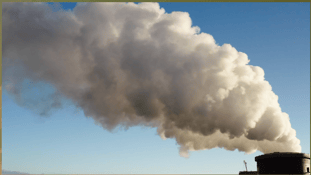 Tireless advocates like Joy Banner and Shamell Lavigne of RISE St. James continue to face pushback from powerful industries. In recent years, Louisiana’s elected officials have made decisions that weaken public health protections and community rights. Since my earlier work on these issues with NSF funding for Statistics for Action , some critical tools for monitoring air pollution have been restricted or dismantled. Nonetheless, the women featured in the film understand that there is no option but to keep fighting for life and justice.
What’s next? Of course, we are eager to share the film with both public and professional audiences, even as we navigate a hostile political landscape that will affect our next steps.
Although Kendall and I were awarded funding in September 2024 to plan screenings with community leaders with STEM-focused films from Kendall’s portfolio as catalysts for dialogue and change, by April 2025 our grant was abruptly—and, we believe, unjustly—cut. We remain hopeful that the funding will be reinstated or that we will find other supporters to ensure the Essence Film Festival screening is only the beginning of a larger journey.