For 60 years, TERC has worked alongside educators, researchers, families, and communities to better understand how people learn STEM.
During that time, we've developed curricula, studied learning environments, piloted new approaches, and partnered with organizations across the country to explore a fundamental question:
What does it take to engage students in meaningful and inspiring STEM learning experiences?
While educational trends, technologies, and standards have evolved, research has consistently pointed to several conditions that help students participate more deeply in STEM. These findings have emerged across classrooms, afterschool programs, community-based initiatives, and informal learning environments.
Key Takeaways:
Research points to five evidence-based approaches that support student engagement in STEM learning:
- Build on students' strengths and experiences
- Include learners in the design process
- Encourage authentic scientific inquiry
- Connect STEM to real-world context
- Integrate science, technology, engineering, and mathematics
The research below explores each of these evidence-based factors in greater detail.
Students Engage More when They See Themselves as STEM Learners
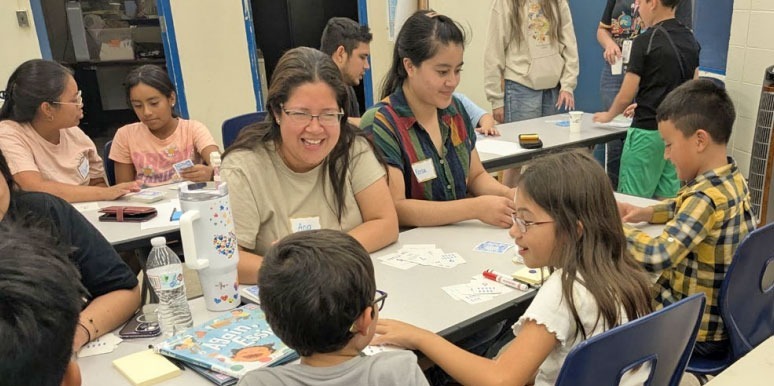
Engagement deepens when learning builds on students' existing knowledge, strengths, interests, and experiences.
This shift happens when learners are invited to play an active role in the learning process, helping to shape investigations, ask questions, and contribute their own ideas. As students begin to see that their thinking matters, they develop greater confidence in their ability to engage with STEM concepts and practices. Over time, this sense of agency can influence whether students continue exploring STEM opportunities, coursework, and career pathways.
Research Spotlight: Fostering Mathematical Belonging
Through Excursions, a series of activities that connect mathematics to real world topics and diverse cultural experiences, TERC researchers Annie Sussman and Megan Murray explored how belonging influences student engagement. Their work found that when students see their ideas, experiences, and ways of learning as valued, they are more likely to engage with mathematics and view themselves as capable mathematical thinkers. These findings suggest that helping learners see themselves reflected in STEM learning can strengthen both confidence and participation.
Source: Sussman, A., & Murray, M. (2026). "Excursions: Activities That Foster Mathematical Belonging." Mathematics Teacher: Learning and Teaching PK–12, 119(3).
Designing with Learners Strengthens the Learning Environment
Research points to the value of designing educational experiences with communities rather than for them. Educators, families, learners, and community organizations all bring expertise that can strengthen the design of learning experiences and expand participation in STEM.
When learners and communities have opportunities to shape learning experiences, those learning environments are often more relevant, inclusive, and responsive to local needs and interests. Co-design can help ensure that educational tools reflect the strengths, questions, and priorities of the people they are intended to serve. This collaborative approach also recognizes learners are contributors whose perspectives can meaningfully inform the learning experience.
Research Spotlight: Inclusive Co-Design with Neurodiverse Learners
In a study exploring the design of a virtual reality science game, TERC researchers partnered with neurodiverse learners as members of the design team rather than treating them solely as participants or end users. The project embraced the principle of "nothing about us without us," ensuring that stakeholder perspectives informed decisions throughout the design process. Findings suggest that inclusive co-design can lead to more accessible learning experiences while creating opportunities for learners to contribute their expertise and shape the educational tools intended to serve them.
Source: Dahlstrom-Hakki, I., Edwards, T., Larsen, J., Alstad, Z., Belton, G., Lougen, D., & Santana, D. (2021). "Inclusive VR through Inclusive Co-Design with Neurodiverse Learners." Proceedings of the 7th International Conference of the Immersive Learning Research Network (iLRN).
Inviting Students to Think Like Scientists and Engineers Deepens Learning
Scientists ask questions. Engineers test ideas. Data scientists investigate patterns. Students become more engaged when they have opportunities to participate in these same practices.
When students are invited to think like scientists and engineers, they deepen their learning as they make observations, collect evidence, test explanations or designs, and generate new questions. Rather than focusing exclusively on learning specific facts or ideas, students become active participants in STEM.
This approach creates space for curiosity. When students are invited to investigate meaningful questions or engineer a solution to a problem, learning becomes something they do rather than something that happens to them.
Research Spotlight: Investigating Ecosystem Change Through Scientific Inquiry
TERC researchers Andee Rubin and Gillian Puttick, along with collaborators, explored how students use data to investigate scientific questions. In a ninth-grade biology unit, students examined a real ecological mystery: Why did wildebeest and buffalo populations in the Serengeti increase dramatically between 1960 and 1975? By developing hypotheses, analyzing evidence, and building explanations, students engaged in the same kinds of reasoning and inquiry practices used by scientists. The study highlights how inquiry-based learning can turn students into active participants in the process of scientific discovery.
Source: Rubin, A., Puttick, G., Penuel, W., Deverel-Rico, C., & Henson, K. (2026). "Using Existing Data to Investigate Ecosystem Change." The Science Teacher, 93(2), 34–40.
Relevance Drives Engagement
Students are more likely to engage when learning feels relevant to their lives.
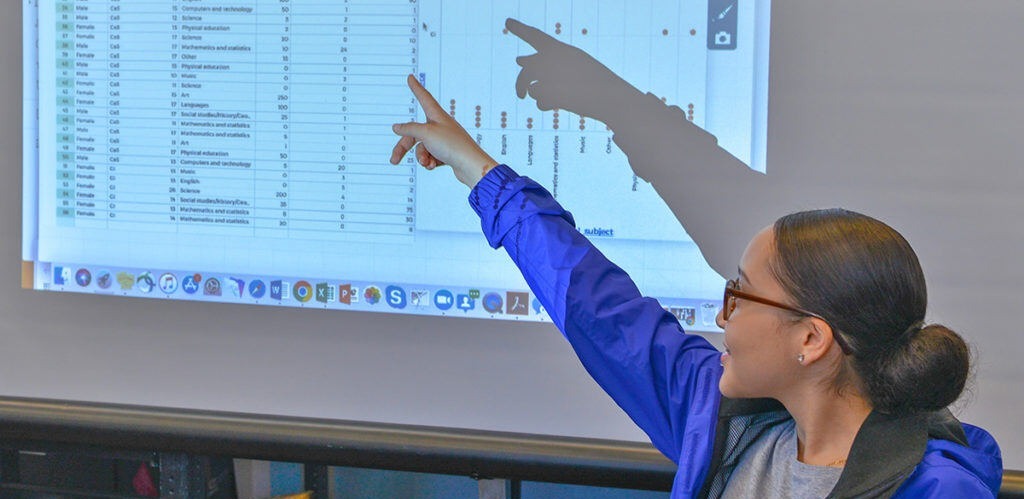
Whether students are exploring local environmental challenges, analyzing community data, or investigating questions connected to their own experiences, relevance helps answer an important question: Why does this matter?
When learners can connect STEM concepts to issues they care about, they are more willing to persist through challenges. Relevance transforms STEM from a collection of facts into a set of tools for understanding the world around them.
Research Spotlight: Data Science and Healthcare as Real-World STEM Learning
TERC researchers and collaborators developed the Data Science, AI and You (DSAIY) in Healthcare curriculum to help students build data literacy through the investigation of real healthcare challenges. Through hands-on data collection, analysis, and interpretation, students use data science and machine learning concepts to explore authentic questions and ethical issues in healthcare. The curriculum demonstrates how connecting STEM learning to meaningful real-world problems can help students develop both technical skills and a deeper understanding of how STEM can be used to address challenges that affect people's lives.
Source: Jesse Eller, K., Larson, A., Price, E., Jackson, B., Hendrik, L., Cassidy, M., & Celi, L. A. (2026). "Increasing Data Literacy in High School Students Through Data Science and Healthcare: Part 1 of 2 Leading to AI Instruction." The Science Teacher, 93(2), 54–63.
STEM Is Most Powerful When Disciplines Work Together
Outside of school, challenges rarely arrive neatly categorized as science, mathematics, engineering, or technology.
Addressing topics such as climate resilience, public health, or artificial intelligence requires multiple disciplines working together. Interdisciplinary STEM experiences help learners see connections across ideas and understand how different tools and perspectives contribute to solving complex problems.
Research Spotlight: Interdisciplinary STEM Learning Through BioRobots
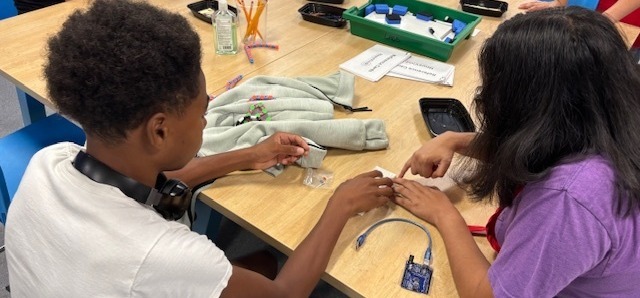
Studying TERC's BioRobots curriculum, researchers found that interdisciplinary STEM learning helped teachers support science and engineering practices across traditional subject boundaries and reinforced the value of connecting disciplines when addressing complex problems.
Source: Cassidy, M., & Puttick, G. (2022). "Because Subjects Don't Exist in a Bubble": Middle School Teachers Enacting an Interdisciplinary Curriculum. J Sci Educ Technol (2022).
What 60 Years of Research and Development Suggest
After 60 years of STEM education research, development and implementation, one lesson stands out. Long-term engagement emerges when learners encounter experiences that are meaningful, inquiry-driven, inclusive, connected to real-world challenges, and grounded in community.
While educational tools and technologies continue to evolve, these core principles have remained remarkably consistent across decades of research and practice.


.png)